Jemposium: Jewellery or What? International Contemporary Jewellery Symposium

A related but tangential discussion that took place in question times and also during socializing was concerned with the dominance of ‘material expressionism.’ By this, I mean jewelry that explores materials in unusual combinations and uses and favors a more organic and grungy look. Was an international style developing rather than work that rigorously engaged with makers’ own cultural and personal landscapes?

AJF In Munich 2012

Munich is known as die stadt der lebensfreude, the city filled with the joy of life – and with the bonus of welcome, sunny weather it was a pleasure to be in the Bavarian capital. The AJF program kicked off when we met on Thursday in the lobby of the luxurious Charles Hotel in the center of town – old friends were re-united and new tour members were greeted, a great start to the first day.

Cranbrook's Metalsmithing Department: The Story Behind Monomater

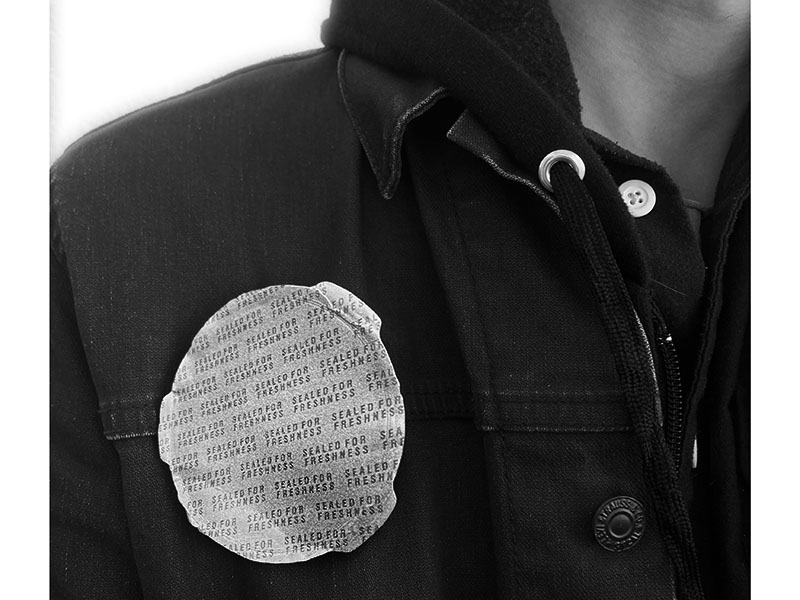
At its most basic level, Monomater posed a challenge to current Cranbrook students in the metalsmithing department and a few select alumni: think differently about contemporary jewelry. Eichenberg’s concept involved asking them to create a cogent statement in one material; if multiple materials were used, they had to have similar sensibilities. The idea was based upon Eichenberg’s view that jewelry today is primarily about collage.

European Jewelry, Nostalgia and Trans-Atlantic Exchange: Iris Eichenberg in Conversation

At the Reitveld there was an interesting thing when I studied there. People with a technical background thought immediately of hinges and they had ten different ways of illustrating that relationship. People who didn’t have the technical background had clear ideas, but struggled with the realization of their ideas. They were both handicapped, but in different ways. Learning is dealing with the handicap.

Crafting Modernism: Midcentury American Art and Design

This exhibition opens up the possibility that we can no longer clearly see the role of craft in the postwar period, since we always impose a cluster of issues from the present (is craft art or not?) onto the evidence of the past. Craft and its relation to art and design is our problem, not a concern endemic to the postwar period. They didn’t worry about it, but we do – and in our worry we impose a certain awkward framework onto the period itself, which makes us less able to see what’s going on.

Packing My Library: Marthe Le Van in Conversation

I feel that contemporary jewelry is a massive field that has little trouble connecting to a large market. Just think of the number of jewelers showing and selling handmade work at any given craft gallery or street fair or on Etsy. Just think of the customer’s thought process in approaching the work – recognizable forms with obvious functions that are attractive. With these advantages, what artist seeking to connect with an audience would choose any form other than jewelry?

Metal Zero

The ability of a material to embody and convey meaning is central to our understanding of culture and of the objects with which we surround ourselves. Metal is a natural and effortless container for meaning, more so than almost any other material. In Western culture, metal is the material receptacle for most highly charged emotions. It is so often that we commemorate through the use of metal that we are desensitized to its ability to actively convey meaning.

From the Forum

Book Review

The New Jewelry

Interview

Kelly L'Ecuyer

Fair Review

Show Time

Exhibition Review

Victoire de Castellane