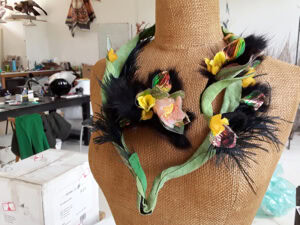
Index image: Work by (left to right, top to bottom) Roberta and David Williamson, Judith Hoyt, Brooke Marks-Swanson, Lisa & Scott Cylinder, and Wendy McAllister, from a private collection, photo: Rebekah Frank
There are as many definitions of a collection as there are for collectors. When noted art collector and philanthropist Eugene Thaw was asked how he would define the art of collecting, he answered with this beautiful explanation: ‘It’s about making some sense out of a group (large or small) of related objects that you’ve accumulated and having each one reinforce the others. You should always be reaching for better examples than what you have, and you should find out what you’re missing, too, so you can fill in the blank spaces. It’s an intellectual activity. I collect to learn and when I feel I have learned my way around a field enough to have a well-rounded collection I give it away – to museums. I no longer need to physically possess works of art, I have them in my mind’s eye.’
The universal truth seems to be that collectors complement their passion with intelligence to build a meaningful collection. Here are suggestions that may prove helpful as you build your collection.
- Visit as many galleries as you can. Gallery owners can be helpful guides.
- Join local art museums and introduce yourself to curators. Share your collecting interests with them.
- AJF offers opportunities to talk to other collectors and find out what they know and have learned about collecting.
- Read! Read anything you can find that relates to your collecting interests – art, art history, reviews and trade publications.
- Visit universities that have jewelry programs. Introduce yourself to the faculty and share your collection with students. Take a history of adornment class or metals workshop.
- Formulate your personal collecting philosophy and define the unifying characteristics of your collection.
- Document your collection. Keep good records on each artist and each purchase.
- When you see a piece that you love, if it fits nicely in your collection and you know it will bring you joy, buy it, wear it and share it.
Discovering how objects came into the museum is an interesting aspect of any exhibition – some are donated, others loaned, some given as a bequest or purchased with donated funds. Collectors and curators need each other: collectors for the work a museum desires and curators for bringing the work to the museum. For both the museum and donor there may be tax and legal considerations. For these reasons, most museums offer highly personalized, full-service consulting resources for all types of charitable giving.
Private collectors are often asked to lend their art for exhibitions. By giving the work public visibility, you support the museum and the jeweler. Additionally, loaning may have the added benefit of enhancing the value of an object through public visibility. There are a number of considerations to take into account when loaning a piece to a museum. These include: value; term of the loan; insurance and liability; transportation and packing; photographic rights; exhibition and labeling; security. These and other considerations are articulated in a loan agreement signed by both the lender and the museum. It is important to have photographs of the item and documentation that supports your purchase. Your insurance agent is a valuable resource, should you have questions.
Assuming your heirs are not keeping their fingers crossed in hopes that your beloved art jewelry will some day be theirs, then you may want to consider making a gift of your jewelry. Gifts are of great benefit to museums, universities and non-profit organizations. Gifts have been responsible for the growth and enhancement of many permanent collections. Gifts can be wonderfully simple, flexible and easy to make. There are many benefits of making a gift of art either during your lifetime or by bequest. You guarantee that your treasured piece will be cared for to the highest standards. You gain a charitable deduction for tax purposes and the removal of items subject to estate tax on the value of those objects. Through your gift, the maker is celebrated and the art form is preserved and displayed for the scholarship and enjoyment of generations to come. If you are considering making a gift, explore all the potential recipients, consider all the options, weigh the tax considerations and, most importantly, enjoy the process of giving. Once you have found the best place for your pieces you should document your intent to give. Museums can provide appropriate language for updating your will or assist you in documenting a current gift to the museum.
* * *
Hay tantas definiciones de una colección como las hay para los coleccionistas. de lo que significa una colección como de un coleccionista. Cuando el notable coleccionista y filántropo, Eugene Thaw, fue cuestionado acerca de su interpretación del arte de coleccionar, respondió con esta hermosa explicación: “Se trata de darle algún sentido a un grupo (grande o pequeño) de objetos relacionados que has acumulado y de que cada uno de ellos refuerce a los demás. Siempre debes buscar los mejores ejemplos de lo que tienes y, también, encontrar lo que necesitas añadir para así poder completar la espacios en blanco de la colección. Es una actividad intelectual. Colecciono para aprender y cuando siento que he aprendido lo suficiente sobre la materia para tener una colección completa la donó – a museos. Ya no necesito poseer físicamente obras de arte, las tengo en mi mente.”
La verdad universal parece ser que los coleccionistas complementan su pasión con la inteligencia para construir una colección significativa. Aquí algunas sugerencias que pueden resultar útiles a medida que se construye una colección.
- Visitar tantas galerías como se pueda. Los propietarios de galerías pueden ser guías útiles.
- Unirse a los museos de arte locales y presentarse a los curadores. Compartir los intereses sobre coleccionar con ellos.
- AJF ofrece oportunidades para hablar con otros coleccionistas y descubrir lo que saben y han aprendido sobre el arte de coleccionar.
- ¡Leer! Leer todo lo que se encuentre relacionado con los intereses acerca del: arte, historia del arte, revistas y publicaciones comerciales.
- Visitar las universidades que tienen programas de joyería. Preséntese ante los miembros de la facultad y compartir las colecciones propias con los estudiantes. Tomar una clase sobre historia de la joyería o un taller sobre joyería.
- Definir una filosofía personal de coleccionismo y establezca las características que unifican la colección.
- Documentar la colección. Mantener buenos registros de cada artista y cada compra.
- Cuando vea una pieza que le encante, determinar que tan bien encaja en su colección y si sabe que le traerá alegría, comprarla, usarla y compartirla.
Descubrir cómo los objetos llegan a formar parte de un museo es un aspecto interesante de cualquier exhibición – algunos son donados, otros son prestamos, algunos entregados como un legado o comprados con fondos donados. Tanto los coleccionistas como los curadores necesitan unos de otros: los coleccionistas para las obras de arte que el museo desea exhibir y los curadores para llevarlas al museo. Tanto para el museo como para el donador pueden existir consideraciones fiscales y legales. Por dichas razones, la mayoría de los museos ofrecen un servicio de consultoría completo y altamente personalizado para todo tipo de donaciones.
A los coleccionistas privados a menudo se les solicita que presten sus obras de arte para exposiciones. Al exhibir la obra públicamente, se apoya tanto al museo como al joyero. Además, el préstamo puede tener el beneficio agregado de aumentar el valor de una pieza a través de la exposición pública. Existe una serie de consideraciones a tener en cuenta al prestar una pieza a un museo. Estas incluyen: valor, plazo del préstamo, seguros y responsabilidad, transporte y embalaje, derechos de autor de la fotografía, exposición y etiquetado, así como seguridad. Estas y otras consideraciones se estipulan en un acuerdo de préstamo firmado tanto por quien presta la obra como por el museo. Es importante tener fotografías del artículo y la documentación que apoye su compra. Su agente de seguros es un recurso valioso, en caso de que tener dudas.
Suponiendo que sus herederos no tienen los dedos cruzados con la esperanza de que su amada joyería artística algún día sea de ellos, entonces debería considerar regalar o donar algunas de sus joyas. Las donaciones son de gran beneficio para museos, universidades y organizaciones sin fines de lucro. Las donaciones han sido responsables del crecimiento y mejora de muchas colecciones permanentes. Las donaciones pueden ser maravillosamente simples, flexibles y fáciles de hacer. Existen muchos beneficios al hacer un regalo de arte, ya sea en vida o por herencia. Usted garantiza que su valiosa pieza será conservada según los estándares más altos. Usted gana una deducción de impuestos sustanciosa y la eliminación de artículos sujetos a impuestos de propiedad. A través de su donación, el autor de la obra es celebrado y el arte es preservado y exhibido para el estudio y disfrute de las generaciones venideras. Si se está considerando realizar una donación, explore todos los posibles recipientes, considere todas las opciones, evalúe las consideraciones fiscales y lo más importante, disfrute el proceso de dar. Una vez que haya encontrado el mejor lugar para sus piezas es importante documentar su intención de dar. Los museos le pueden auxiliar con la asesoría necesaria para actualizar su testamento o asistirlo en la documentación de su donación actual al museo de su elección.
Translated from English by Andreína Rodriquez with assistance from readers Barbara Magaña and Mariana Acosta.